Rodents in the Attic? What Contaminated Insulation Really Does to a Dunwoody Home
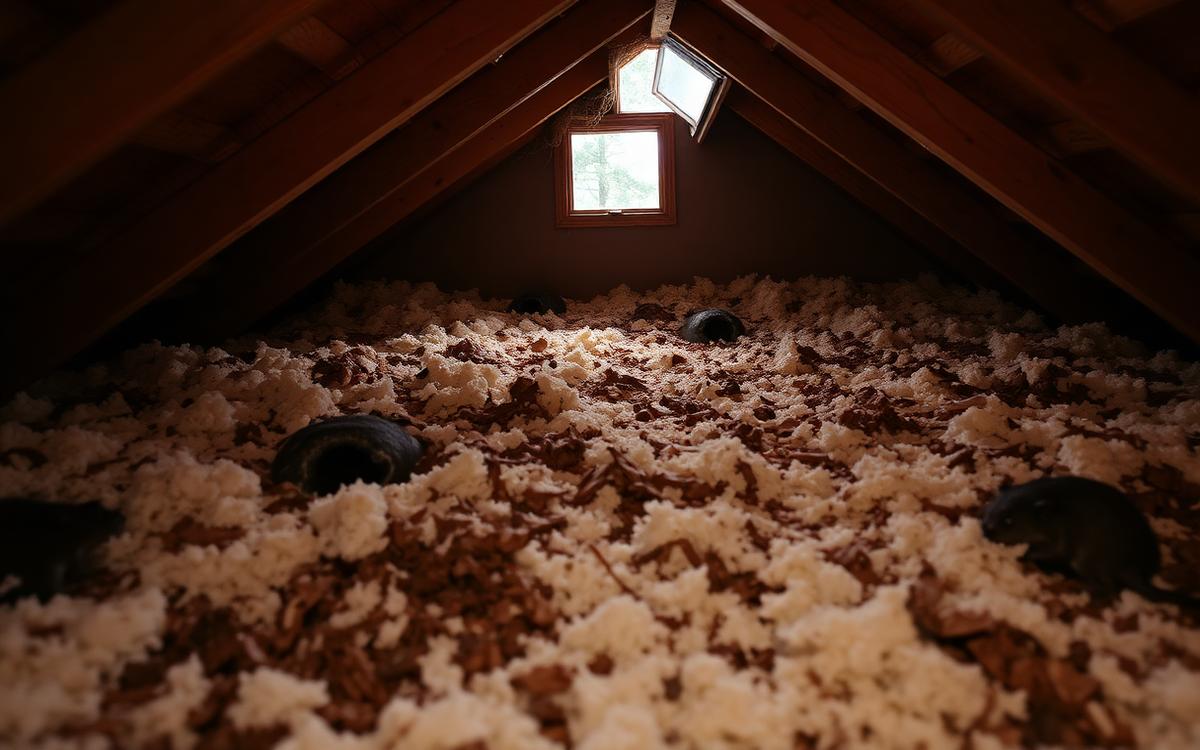
Most Dunwoody homeowners find out the same way. Scratching overhead around dusk, a faint ammonia smell in the upstairs hallway, or a pest control tech who comes down the attic ladder and says something you were not expecting: "You have got activity up there, and the insulation is done."
The trapping part usually gets handled quickly. The part that gets skipped, and the part that keeps the house smelling wrong months later, is the insulation itself. Rodents do not simply pass through attic insulation. They live in it, tunnel through it, nest in it, and use it as a bathroom for as long as they are up there. Once they are gone, all of that stays put, sitting directly above your ceiling drywall.
At Iron Hive Insulation we handle contaminated insulation removal across Dunwoody, from the 1960s and 70s ranches and splits near Dunwoody Village and Georgetown to the newer infill builds off Chamblee Dunwoody Road. This guide explains what contamination actually does, how to judge whether your attic needs a full removal or a partial one, and what a correct replacement looks like.
Why Dunwoody Attics Get Hit So Often
Dunwoody is a heavily wooded, established community, and that combination is close to ideal for squirrels, roof rats, and mice.
- Mature hardwoods with limbs over rooflines. Squirrels do not climb walls to get in. They walk in along a branch and work at the nearest soft edge of the roof.
- Housing stock from the 1960s through the 1980s. Older soffit returns, gable vents with rusted or missing screening, and original ridge and roof penetrations give animals dozens of half-inch entry opportunities.
- Attic construction that hides the problem. Blown-in fiberglass and cellulose look normal from the hatch. Tunneling, nesting, and droppings happen deeper in the bays where nobody shines a light.
The result is that contamination is frequently months or years old by the time anyone notices it. In the attics we open in Dunwoody, the average homeowner is shocked at how much of the insulation is affected. Not a corner, but wide sections of the attic floor.
What Contaminated Insulation Actually Does
It stops working as insulation
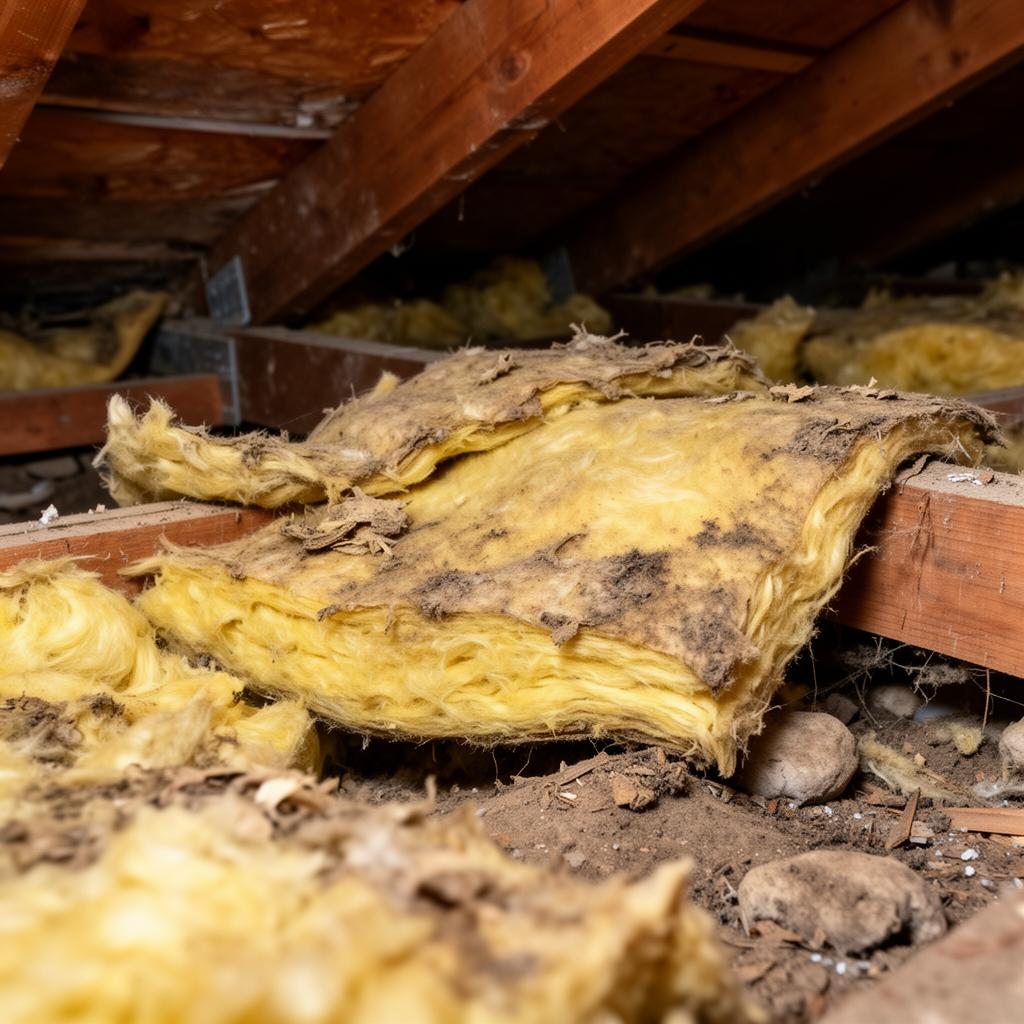
Insulation performs by trapping still air. Rodents destroy that in three ways: they compress it as they travel, they tunnel channels through it, and they pull it apart for nesting material. Compressed and channeled insulation loses a meaningful share of its rated R-value, and the loss is worst exactly where you would not want it. Along the paths animals use most, which tend to be near the eaves and over interior walls.
If your upstairs has started running warmer in summer or colder in winter since the pest activity began, that is not your imagination. Damaged insulation and the entry holes that came with it are both working against you.
It keeps producing odor
Rodent urine and droppings soak into fiberglass and cellulose and stay there. Attic heat in a Georgia July drives that odor down through recessed light cans, attic hatches, and top plate gaps into your living space. This is why deodorizers and ozone treatments only work briefly. The source material is still in the building.
There is a second problem: rodent scent markings act as an invitation. Other animals read them and treat the attic as an already-established, safe location. Leaving contaminated material in place raises the odds of a repeat infestation.
It creates a genuine health concern
Dried droppings and nesting debris break into dust. Every time your HVAC system cycles, air moves between the attic and your living space through leaks in the ceiling plane, and that dust travels with it. Rodent waste is associated with bacteria, allergens, and in some cases hantavirus and leptospirosis. Squirrels and rats also carry mites and fleas that stay in the nest after the animals leave.
This is the specific reason we treat contaminated attics as a containment job rather than an ordinary insulation swap.
Five Signs Your Attic Insulation Needs to Come Out
1. Visible tunneling or trenching across the surface of blown-in material, especially running toward the eaves.
2. Droppings on the surface or on top of ductwork. Surface droppings almost always mean far more below the surface.
3. A persistent musty or ammonia smell in upstairs rooms, closets, or near the attic hatch, worst on hot afternoons.
4. Shredded or nested material gathered in clumps, often near the chimney chase, gable ends, or bathroom fan housings.
5. Chewed wiring or damaged duct insulation. If wiring has been chewed, get an electrician involved before anything else. That is a fire risk, not just an insulation issue.
If you have one of these, you likely need partial removal. If you have three or more, plan on a full removal of the attic floor.
What Safe Removal and Replacement Looks Like
A correct contaminated attic job in Dunwoody runs in a specific order, and skipping steps is what leaves homeowners paying twice.
1. Confirm the animals are out and the entries are closed
Insulation work should follow exclusion, not precede it. If entry points are still open, new insulation gets contaminated on the same schedule as the old. We coordinate with your pest professional and will not install until exclusion is verified.
2. Contained removal with commercial vacuum equipment
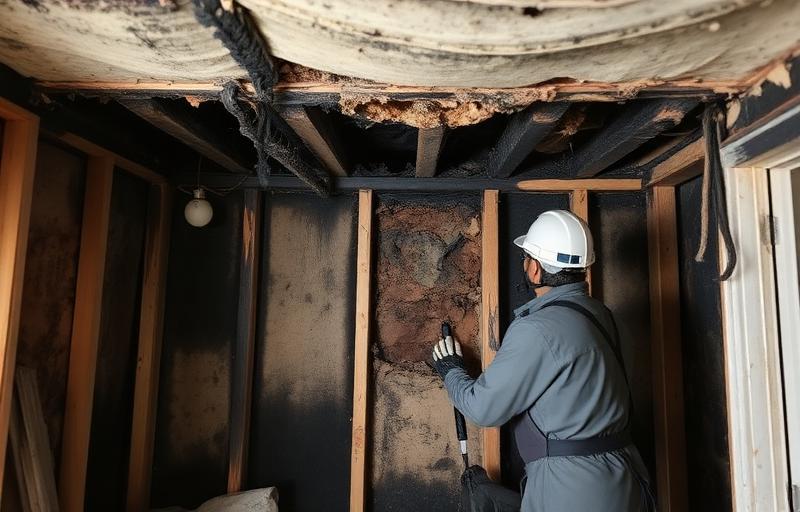
Old material is vacuumed into sealed bags through a hose run to the truck, not carried down your stairs in armloads. Crews work in respirators and protective suits, and the attic access is sealed off from the house so airborne dust does not migrate into living areas.
3. Cleaning, sanitizing, and deodorizing the deck
Once the attic floor is bare, droppings and nesting debris get removed from framing and the top of the ceiling drywall, then the surfaces are treated with an antimicrobial to neutralize bacteria and residual odor at the source. This is the step that actually ends the smell.
4. Air sealing while the attic is open
An empty attic is the only convenient time in a home's life to do this properly. Every top plate seam, wire and pipe penetration, recessed can, bath fan housing, and chimney chase gets sealed. Beyond the energy benefit, air sealing closes the same interior pathways that were carrying attic odor and dust into your bedrooms. Skipping it means you paid for removal and left the delivery route open.
5. Reinsulating to current standards
Dunwoody sits in Climate Zone 3, where the target for attic floors is R-38 to R-49. Most homes we open here still have somewhere between R-19 and R-30 from the original build. Replacement is the moment to correct that, along with adding soffit baffles and insulating the attic hatch. Two details routinely missed on the original install. For most Dunwoody attics we use blown-in insulation at full depth; for homes with ducts in the attic or repeat moisture and pest history, a spray foam roof deck is worth pricing, since it brings the attic inside the sealed envelope and eliminates the vented soffit entries animals prefer.
Will Insurance Cover Any of It?
Sometimes, and it depends on the policy language. Most homeowners policies exclude damage from "vermin" or "rodents" as a maintenance issue, but some carriers will cover sudden and accidental damage caused by a larger animal, or cover the resulting damage even when the animal itself is excluded. It is always worth a call. Our written scopes document the affected square footage and conditions, which is exactly the documentation adjusters ask for. We cover the broader topic in our guide on insurance and insulation damage.
Keeping It From Happening Again
- Trim limbs back at least six to eight feet from the roofline.
- Have soffit, gable, and ridge vent screening inspected annually. Rust and storm damage open gaps quietly.
- Seal gaps around plumbing vents, exhaust caps, and where dormers meet the roof.
- Keep bird feeders and pet food away from the foundation.
- Have the attic looked at once a year. Ten minutes at the hatch catches problems while they are still small.
Getting a Straight Answer on Your Attic
If you have heard something overhead, smelled something you cannot place, or a pest company told you the insulation is compromised, get eyes on it before another Georgia summer bakes the odor into the house. Iron Hive Insulation offers free attic inspections across Dunwoody and the surrounding communities including Sandy Springs, Roswell, Tucker, Chamblee, and Brookhaven. We will document what is actually up there with photos, tell you honestly whether it is a partial or a full removal, and give you a written scope you can compare against anyone else's.
Call 678-606-HIVE (4483) or request an estimate online. We will get your attic clean, sealed, and performing again.