Georgia Insulation Rebates & Savings in 2026: What Metro Atlanta Homeowners Can Still Claim

If you've been putting off an insulation upgrade because you were waiting for the right time financially, 2026 still has meaningful savings available. You just need to know where to look. It helps to understand the project first: our guide to what determines insulation cost in Metro Atlanta explains the factors that shape a scope of work before incentives. The landscape changed at the end of 2025, and a lot of homeowners don't realize what's gone, what's still available, and how the remaining programs fit together.
Before you start: rebate programs and amounts change often. Confirm current amounts and requirements directly with your utility or program before any work begins.
This guide lays it all out clearly for Metro Atlanta and North Georgia homeowners. No fluff, no fine print buried at the bottom. Just a straightforward breakdown of what you can still claim, what the requirements are, and how Iron Hive Insulation can help with your insulation project.
What Changed at the End of 2025: The Federal Tax Credit Is Gone
Let's start with the news that surprised a lot of homeowners. The federal Energy Efficient Home Improvement Credit, also known as Section 25C, provided a 30% tax credit on insulation and air sealing upgrades, up to $1,200 per year. It was a significant incentive for homeowners who completed work in 2025 or earlier.
That credit expired on December 31, 2025. The termination was accelerated by federal legislation, ending the program years ahead of its originally scheduled 2032 expiration date.
If you completed insulation work in 2025, you can still claim the credit on your 2025 tax return using IRS Form 5695. But for any work completed in 2026 and beyond, the federal credit is no longer available.
The good news: several strong programs at the state and utility level are still very much active, and for some households, the state program can cover more of the cost than the federal credit did.
What's Still Available in 2026: Your Complete Guide
Georgia Power Home Energy Improvement Program (HEIP)
If you're a Georgia Power residential customer, which covers most of Metro Atlanta, this program may apply to your insulation project. Georgia Power's Home Energy Improvement Program offers cash back on qualifying energy efficiency improvements, including attic insulation, air sealing, and duct sealing.
The program runs August 1, 2026 through December 31, 2028. For attic insulation, Georgia Power rebates 50% of the cost, up to $300 for homes heated with electricity or $200 for gas-heated homes. To qualify, your existing attic insulation must be below R-19, and the new insulation must bring the attic to R-49 or greater, or to current state code as the structure allows. Spray foam and dense-pack or wet-spray cellulose require a program installer and a home energy assessment before and after the work. Applications are due within 60 days of the work, along with your contractor's paid invoice, and rebates are capped at $2,500 per customer per year.
The bigger opportunity is bundling. The Home Comfort Bundle pays up to $1,700 for electric-heated homes or $1,400 for gas-heated homes. It must include attic insulation, air sealing, and duct repair and sealing; existing attic insulation must be below R-19, and most of the ducts must be in unconditioned space such as the attic or crawlspace. The Home Comfort Duo, air sealing plus an insulation upgrade, pays up to $1,000 (electric) or $800 (gas). These larger rebates require using a Georgia Power program installer. Bundling the work not only maximizes your rebate dollars but also can improve performance, since air leaks and duct losses affect how well attic insulation works.
Iron Hive provides the documentation needed for your application, including itemized invoices and material specifications. Ask us whether your project needs a program installer for the bundle rebates.
Georgia Home Energy Rebates Program (HER)
In March 2025, Georgia fully launched its statewide Home Energy Rebates program through the Georgia Environmental Finance Authority (GEFA), funded by federal IRA dollars allocated to the states. This program is still active in 2026.
The program has two components:
Home Efficiency Rebates (HER): Covers whole-home energy efficiency retrofits including insulation and air sealing. To qualify, the work must be estimated to reduce household energy use by at least 20%. Rebates depend on how much energy the project is estimated to save and on household income. For households under 80% of area median income, rebates can cover up to 98% of project costs, up to $10,000 when estimated savings are 20 to 34 percent and up to $16,000 at 35 percent or more. For other households, rebates can cover up to 50% of project costs, up to $2,000 at 20 to 34 percent savings and up to $4,000 at 35 percent or more.
Home Electrification and Appliance Rebates (HEAR): Covers electric appliances and systems, including heat pumps, for households with income below 150% of area median income. Insulation, air sealing, and ventilation are also among the measures covered by Georgia's Home Energy Rebates, so it's worth asking about even for an insulation-focused project.
The HER program requires working with a participating contractor and completing a qualifying energy assessment. The application and contractor list are managed through energyrebates.georgia.gov. Ask us whether your project may qualify, and we can point you to the state's approved contractor list.
Local Electric Membership Co-ops (EMCs)
If you're not a Georgia Power customer, if you're served by one of Georgia's electric membership cooperatives, you may have access to additional rebate programs that are separate from Georgia Power's HEIP. Many EMCs offer their own insulation and efficiency rebates.
Sawnee EMC (Forsyth, Dawson, and surrounding counties): rebates half the cost of an attic upgrade to R-49 or greater, up to $200, for work completed in 2026. Not available for homes built after January 1, 2021, and funds are available while they last.
Cobb EMC (parts of Cobb, Cherokee, and Bartow counties): a one-time incentive of up to $500 for qualifying improvements, including attic insulation, through Cobb EMC's Energy Network program, where participants agree to take part in member surveys and similar activities. Single-family homes only.
Jackson EMC (Hall, Barrow, and surrounding counties): up to 50% of the cost, up to $400, for insulation and air sealing. Requires a home energy evaluation and a Jackson EMC network contractor.
Check your utility bill to confirm who your electric provider is, then visit their website or call customer service to ask specifically about current energy efficiency rebates for insulation. Programs change, and calling directly is the fastest way to get current information.
Can You Stack These Programs?
Sometimes. Ask your utility and the state program whether rebates can be combined, since rules differ. A homeowner who qualifies for both Georgia Power's Home Comfort Bundle rebate and the Georgia HER program may be able to combine incentives, depending on each program's rules.
The key requirements for stacking are straightforward. First, each program must allow it. Second, the total rebate amount typically cannot exceed the total project cost. Finally, documentation must be submitted to each program separately.
Iron Hive will help you understand which programs apply to your project and what documentation you need to file for each one.
How Much Can You Actually Save in Metro Atlanta?
Here's how the rebates apply to a common project. Imagine a typical attic insulation upgrade for a 1,500 square foot attic, upgrading from R-13 to R-49. In Metro Atlanta, a project like that is typically a few thousand dollars, depending on attic size. From Georgia Power, you could receive up to $300 back on the attic insulation alone ($200 for gas-heated homes), or up to $1,700 ($1,400 gas) through the Home Comfort Bundle. If your household income qualifies for the Georgia HER program, you could also receive a rebate through that route, depending on your income and the project's estimated energy savings.
Insulation can last for decades when it stays dry and undisturbed.
Tips for Maximizing Your Rebate Dollars
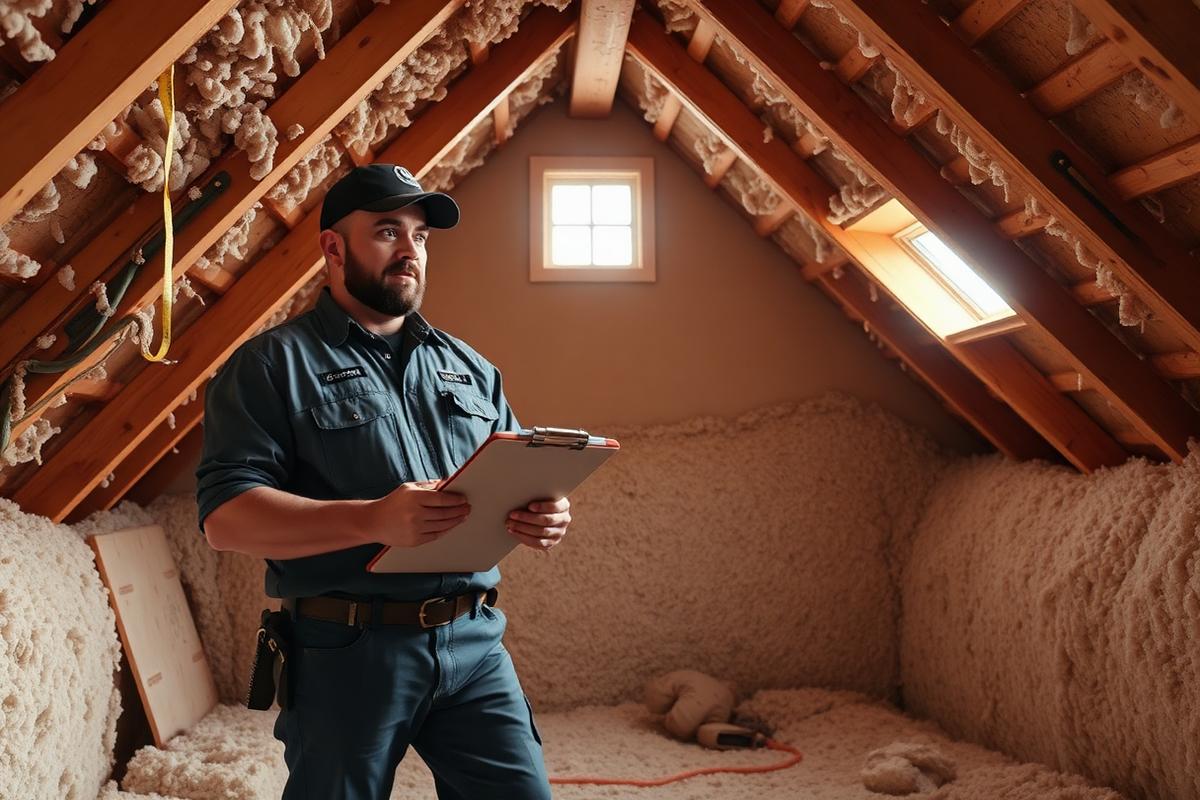
Start with a free assessment before scheduling work. Many rebate programs require documentation of your starting R-value and condition. Having that documented from the beginning of the project makes the rebate process much smoother.
Ask about bundling before signing a contract. Georgia Power's Home Comfort Bundle (up to $1,700 electric / $1,400 gas) is far larger than the standalone attic rebate (up to $300 / $200). If you're planning attic insulation, adding air sealing and duct sealing to the scope can increase your rebate.
Confirm your utility provider and ask about their specific programs. Don't assume Georgia Power's programs are your only option. If you're served by an EMC, call them directly.
Keep all documentation. Paid invoices, material specifications, contractor information, and before/after photos (if available) are all useful for rebate applications. A good contractor provides this automatically. Iron Hive includes all documentation with every project.
Apply promptly. Most rebate programs have submission windows. Georgia Power's is 60 days from installation. Missing the deadline means forfeiting the rebate.
Check energyrebates.georgia.gov for the most current state program information, as program details and funding availability can change throughout the year.
Why This Matters for Metro Atlanta Homeowners Specifically
Georgia's climate creates a particular urgency around insulation upgrades. The combination of hot, humid summers and mild but unpredictable winters means your home's thermal envelope is working hard year-round. Not just in January. Attic insulation is one of the more cost-effective home upgrades, and many programs reward it.
Pair that with currently available rebates and it's a good time to look at your attic. The Georgia state rebate program is funded and active. Georgia Power's HEIP is running. Some programs may allow you to combine rebates, so ask each one. Programs can change or run out of funding, so confirm availability before you start.
Iron Hive Insulation Makes the Rebate Process Easy
We know that rebate paperwork can feel overwhelming. Iron Hive Insulation handles the documentation side so you don't have to figure it out alone. After every project, we provide an itemized paid invoice with material specifications, R-value documentation showing before and after values, contractor information needed for utility and state program submissions, and guidance on which programs your project qualifies for and how to apply.
We serve homeowners across Roswell, Alpharetta, Marietta, Cumming, Canton, Johns Creek, Sandy Springs, Woodstock, and all surrounding Metro Atlanta communities.
Ready to See How Much You Can Save?
A free assessment from Iron Hive Insulation gives you two things: a clear picture of your home's insulation needs and a specific breakdown of what rebates and savings your project qualifies for. We'll tell you exactly what the upgrade costs, what you can get back, and what your projected energy savings look like going forward.
Contact Iron Hive Insulation today to schedule your free assessment and find out what 2026's available programs mean for your home.