Spray Foam Insulation for Existing Homes in Metro Atlanta: What to Expect
Spray foam insulation has a reputation as a new construction product. Something you install when the walls are open and everything is accessible. That reputation is only half right. While spray foam is absolutely the gold standard for new construction, it's also one of the most effective and versatile upgrades you can make to an existing home, even with drywall up and ceilings finished. It's the material we reach for most in vaulted, cathedral-ceiling homes like the mountain-style builds around Dawsonville, where there's no room for thick batts.
The key is knowing where spray foam makes the most sense in a retrofit context. And understanding what you're actually getting when you invest in it. In Metro Atlanta's demanding climate, where summers are brutal and humidity is relentless, spray foam in the right locations can transform a home's comfort and efficiency in ways that traditional blown-in insulation simply can't match. As a trusted insulation contractor in Roswell, GA, we install spray foam insulation in homes throughout the area every week.
Here's everything you need to know about spray foam insulation for existing homes in Metro Atlanta.
Open-Cell vs. Closed-Cell Spray Foam: Which Is Right for Your Home?
Before getting into where spray foam is most effective, it's worth understanding the two types and how they differ. Because the choice between them matters for retrofit applications.
Closed-Cell Spray Foam
Closed-cell foam is denser, harder, and provides a higher R-value per inch. Typically R-6 to R-7 per inch, compared to R-3.5 to R-4 for open-cell. It also acts as a vapor barrier, which makes it ideal for any location where moisture is a concern: rim joists, crawl spaces, basement walls, and exterior-facing cavities. Closed-cell foam also adds structural rigidity to whatever surface it's applied to, which is a useful bonus when applied to rim joists or wall framing.
The trade-off is cost. Closed-cell foam is more expensive per square foot than open-cell, and it expands less during application, so thicker applications require more material.
Open-Cell Spray Foam
Open-cell foam is softer, more flexible, and significantly less expensive per square foot than closed-cell. It expands much more aggressively during application, filling large cavities quickly, and provides excellent air sealing and sound deadening. Its R-value per inch is lower, but for applications like attic encapsulation where you're applying it across a large surface area and can achieve greater thickness, it performs exceptionally well.
Open-cell foam is vapor-permeable, meaning it allows some moisture to pass through. For attic applications on the roof deck, this is actually a desirable characteristic: it allows the roof deck to dry toward the interior if there's ever minor moisture intrusion, rather than trapping it.
How to Choose
In practice, Iron Hive often uses both types in the same home. Closed-cell at the rim joists and in crawl spaces where moisture resistance is critical, and open-cell on the attic roof deck where the goal is large-area coverage and air sealing. We'll walk you through the right choice for each location during your assessment.
Where Spray Foam Delivers the Biggest Impact in Existing Atlanta Homes
Attic Encapsulation (Open-Cell on the Roof Deck)
This is the most transformative spray foam upgrade available to existing Atlanta homeowners, and it's the application we get the most calls about. Rather than adding blown-in insulation to the attic floor, open-cell spray foam is applied to the underside of the roof deck and the gable end walls. The result is a conditioned attic. A space that's thermally connected to the rest of the home rather than sitting at outdoor temperatures.
Why does this matter so much in Atlanta? Because most Metro Atlanta homes have their HVAC equipment and ductwork in the attic. When that attic reaches 150°F in July, even perfectly insulated and sealed ductwork loses efficiency. The air inside the ducts picks up heat during delivery, and the air handler works in an environment that degrades its performance. Encapsulating the attic eliminates this entirely. Duct heat gain drops dramatically, HVAC runtime decreases, and the home reaches and holds the desired temperature more easily.
Homeowners who encapsulate their attic with spray foam frequently report energy bill reductions of 20–30% and a dramatic improvement in comfort on the upper floors of their home. It's also the application that generates the most "I wish I'd done this years ago" feedback from our customers.
Rim Joists and Band Joists (Closed-Cell)
The rim joist is the perimeter framing member that sits on top of your foundation wall, just below the first-floor subfloor. It's exposed in your basement or crawl space and is one of the most air-leaky parts of any home. Particularly in houses built before the 1990s, when air sealing practices were minimal or nonexistent.
A two-inch application of closed-cell spray foam directly to the rim joist provides both R-13 or better insulation value and a complete air and vapor barrier in one step. It's one of the most cost-effective spray foam applications we do. The area is relatively small, the work is fast, and the results are immediate. Homeowners often notice floor temperature improvements and reduced drafts within days of installation.
Crawl Space Walls and Piers (Closed-Cell)
For homes with vented crawl spaces, which describes a significant percentage of Metro Atlanta homes, particularly those built before 2000, spray foam on the crawl space walls and piers is a game-changing upgrade. Rather than insulating the floor assembly above (which is the traditional approach), spray foam on the walls creates a conditioned crawl space that's isolated from outdoor air and humidity.
The benefits are multiple: floors above the crawl space are warmer and more comfortable, humidity infiltration into the home drops substantially, the risk of moisture-related damage to floor framing and subfloor material decreases, and pest activity in the crawl space typically drops as well because the environment becomes less hospitable. Combined with a vapor barrier on the ground, spray foam crawl space encapsulation is one of the most comprehensive moisture control upgrades available for older Atlanta homes.
Bonus Rooms, Knee Walls, and Cathedral Ceilings
These are some of the most thermally problematic spaces in any home, and they're notoriously difficult to insulate effectively with traditional materials. Bonus rooms over garages, rooms with knee walls at the eaves, and cathedral ceilings with limited rafter depth all present geometric challenges that batts and blown-in insulation struggle to solve.
Spray foam, applied directly to the sloped ceiling surface, knee wall framing, or the ceiling of the bonus room, conforms completely to the geometry of the space and provides a seamless air seal that traditional insulation can't replicate. If you have a room that's always uncomfortable regardless of how long the HVAC runs, spray foam in the right location is often the definitive fix.
What the Installation Process Looks Like
If you've never had spray foam installed, the process can feel like a black box. Here's what to expect when you work with Iron Hive:
Step 1. Free Assessment
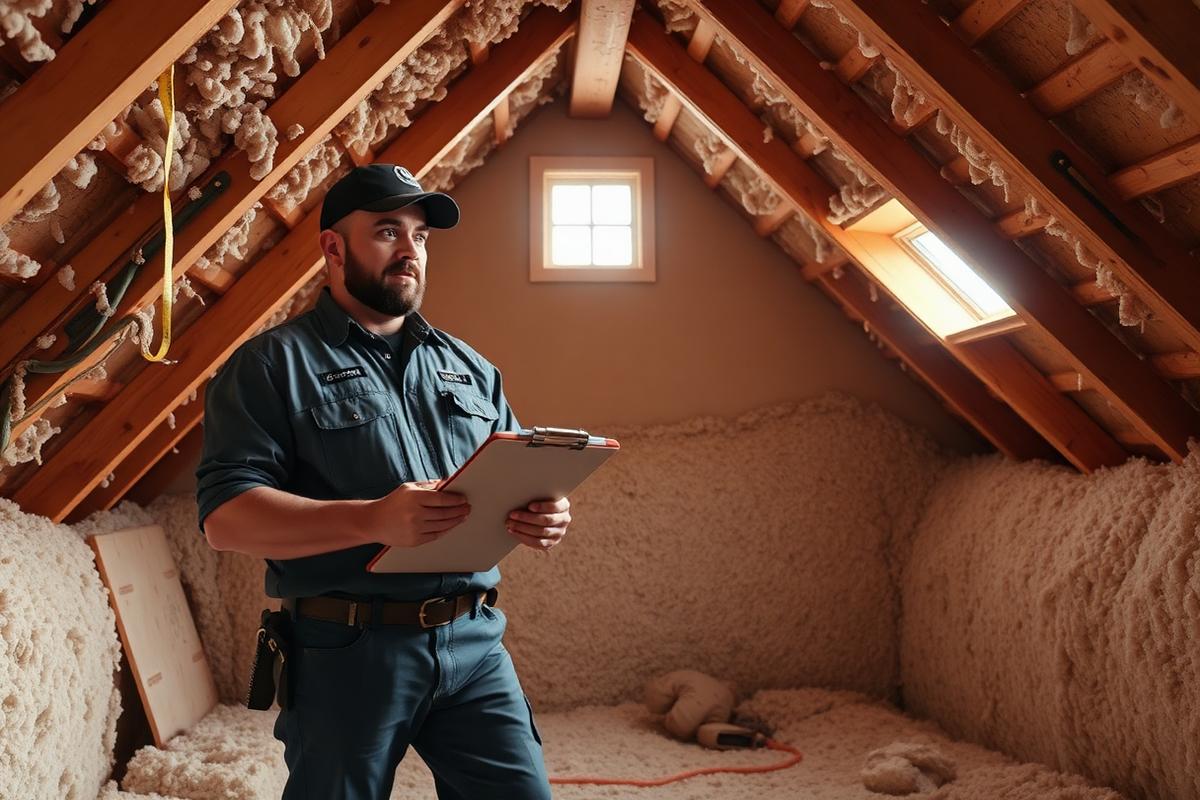
Before any quote is provided, one of our team members visits the home to assess the target areas. We measure existing insulation, check for moisture issues, evaluate duct conditions in the attic, and identify any concerns that need to be addressed before spray foam is applied. We take photos and provide a detailed written scope of work with the quote.
Step 2. Preparation
On installation day, we protect the work area. In attics, this means covering your HVAC equipment, any stored items, and attic surfaces that aren't receiving foam. In crawl spaces, we prepare the ground surface and protect piers and mechanicals. We mask off any surfaces that need clean edges.
Step 3. Installation
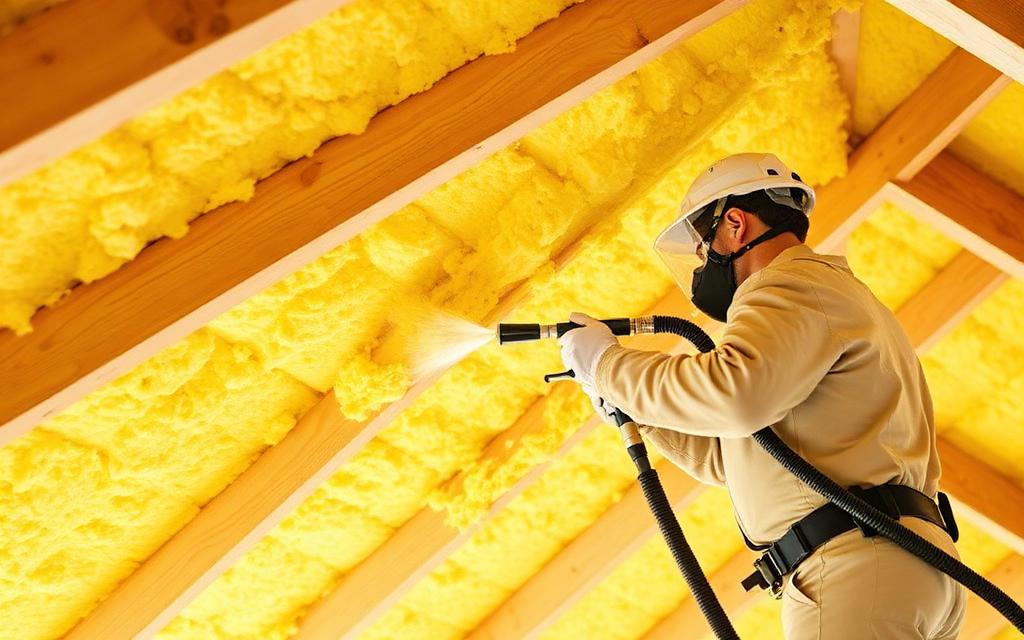
Spray foam is mixed and applied on-site using heated, pressurized equipment. It expands immediately on contact with the surface and reaches its full cure within a few hours, though it continues to harden over the following 24 hours. Most residential retrofit projects are completed in a single day.
Step 4. Off-Gassing and Re-Occupancy
Fresh spray foam releases isocyanate vapors during and immediately after application. Iron Hive follows industry and manufacturer guidelines for re-occupancy timing. Typically 24 hours for the main living areas to be fully re-occupied. For attic or crawl space applications where occupants aren't in the space, the impact on daily life is minimal. We'll give you specific instructions for your project before we start.
Step 5. Final Walk-Through
Before we leave, we walk through the completed work with you, confirming coverage, thickness, and air seal quality. We answer any questions and provide documentation of the work completed for your records.
How Much Does Spray Foam Cost for an Existing Home in Metro Atlanta?
Spray foam costs more per square foot than blown-in insulation. There's no getting around that. (For the factors that shape what any material costs to install, see our guide to what determines insulation cost in Metro Atlanta.) But the comparison shouldn't be purely about upfront cost. Consider what you're actually getting:
Blown-in insulation adds R-value but doesn't meaningfully reduce air infiltration on its own. Spray foam adds R-value and creates a comprehensive air seal in the same application. The air sealing component alone is responsible for a significant portion of the energy savings homeowners experience after spray foam installation.
For attic encapsulation specifically, the calculus also includes HVAC duct efficiency. If your ductwork is in the attic, which it almost certainly is if you live in Metro Atlanta, bringing that ductwork inside the conditioned space via encapsulation is effectively an HVAC efficiency upgrade on top of an insulation upgrade. The combined value often makes spray foam the better investment even when the upfront cost is higher.
Every home is different, and so is every quote. The only way to know your specific cost and projected savings is to have Iron Hive assess your home. We'll give you a clear, itemized quote and an honest assessment of the return you can expect.
Serving Metro Atlanta Homeowners
Iron Hive Insulation installs spray foam insulation in existing homes throughout Roswell, Alpharetta, Marietta, Cumming, Canton, Johns Creek, Sandy Springs, Woodstock, Ball Ground, and the surrounding North Atlanta area. We're licensed, insured, and focused exclusively on insulation. Which means every job we do is an insulation job, not a side service from a general contractor.
Our crews are trained and experienced specifically in spray foam application. Spray foam is an exacting product. Coverage, thickness, temperature, and mixing ratios all affect the final result. Done right, it lasts the life of the home. Done wrong, it can underperform or cause problems. Experience matters.
Get a Free Spray Foam Estimate for Your Home
If you've been curious about spray foam, whether for your attic, crawl space, rim joists, or a problem room, the first step is a free assessment from Iron Hive. We'll look at your home, tell you exactly where spray foam makes sense for your situation, and give you a clear quote. No pressure, no upsell, no surprise add-ons.
Contact Iron Hive Insulation today and find out what spray foam can do for your Metro Atlanta home.